
Pokedoku
Recommended Logic Games
What Is Pokedoku?
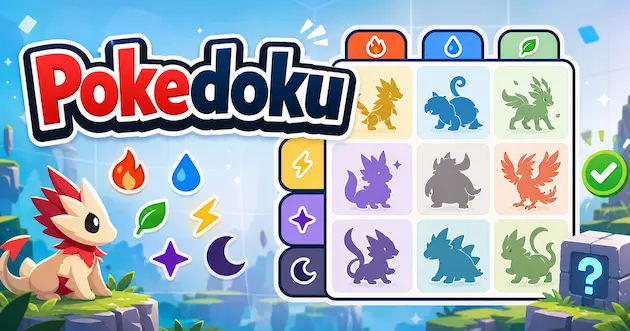
Pokedoku is a daily Pokemon logic grid where each square must satisfy two clue directions at the same time. Every answer sits at the intersection of a row and a column, so success depends on understanding how categories overlap rather than just knowing one fact at a time.
That makes the game feel closer to a deduction puzzle than a standard trivia quiz. You are not only recalling Pokemon names. You are testing whether a Pokemon belongs in a very specific combination such as a type, region, generation, evolution stage, or other roster-based category.
How Pokedoku Works
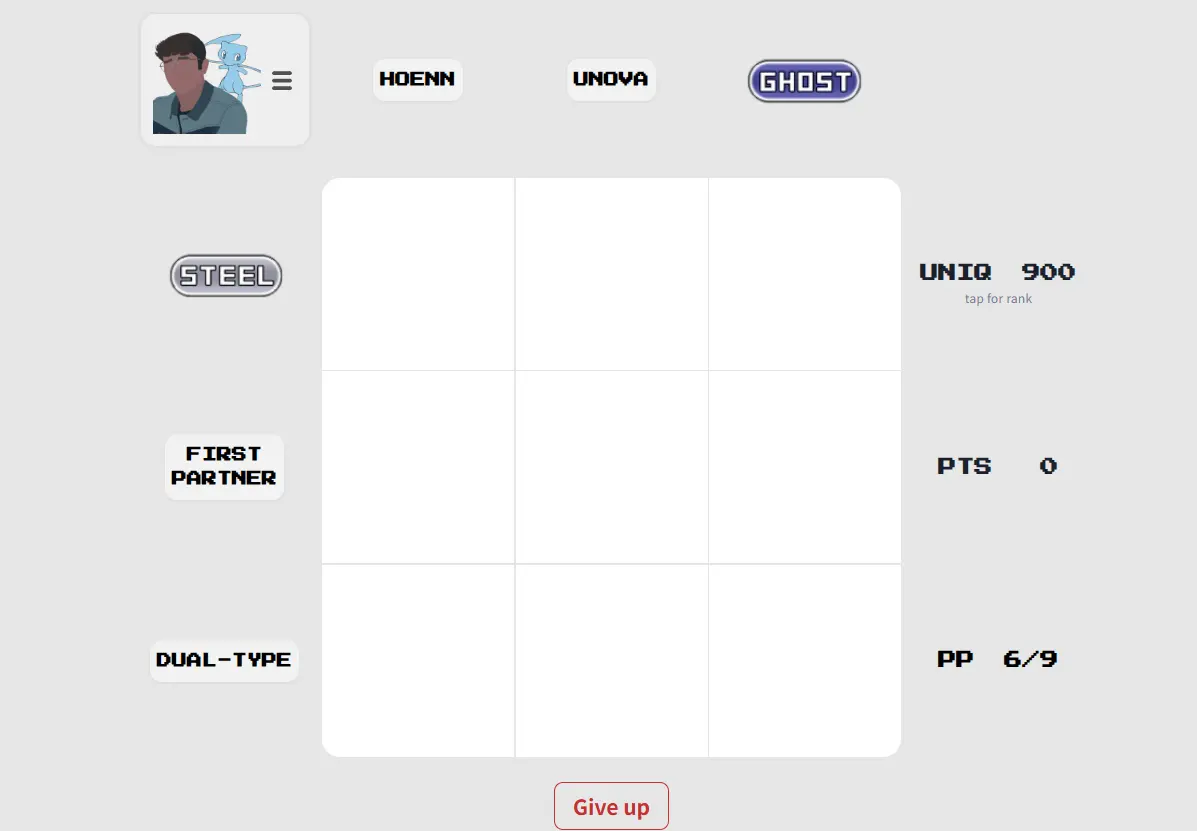
A standard board uses a 3x3 grid. The clues across the top define one set of constraints, and the clues down the side define another. To solve a square, you need a Pokemon that matches both clues at once.
The difficulty comes from overlap. A clue may look easy on its own, but the correct answer can still be narrow once it has to satisfy the second axis. Strong players read the whole board first instead of solving one square in isolation.
How to Play Pokedoku
- Scan the row clues and column clues before placing anything.
- Pick a square where the category overlap feels obvious and low-risk.
- Enter a Pokemon that matches both clue conditions.
- Use your confirmed answers to narrow the harder intersections.
- Finish the 3x3 board while protecting rarity and avoiding rushed guesses.
How to Read the Grid Properly
The most common mistake is to treat a square as if it only belongs to one category. In Pokedoku, every cell is really a two-part logic test. If the top says one type and the left side says one region, the answer is not any Pokemon from that type or that region. It must satisfy both at once.
This is why board scanning matters. Some clues create broad answer pools, while others produce very thin intersections. Seeing those thin intersections early helps you avoid burning easy names where they may be more useful elsewhere.
Best Early-Board Strategy
- Start with broad knowledge squares: Open with intersections you can verify immediately instead of forcing a rare pick too early.
- Save flexible answers for later: Some Pokemon fit multiple cells, and using them too soon can make the board harder.
- Think in overlap groups: Type plus region, type plus generation, or type plus evolution stage are often better mental buckets than single clues.
- Watch for thin intersections: A clue pair may only have a handful of valid answers, so reserve attention for those before the board gets crowded.
- Use roster memory, not only type memory: Many errors come from remembering a Pokemon's theme but not its exact classification.
Why Pokedoku Is More Than a Fan Quiz
Pokedoku rewards structured knowledge. Players who know types, regions, and generations in isolation still need to combine those facts under pressure. That makes the game satisfying even for people who already know the franchise well.
It also creates real replay value because the puzzle is about category intersections, not just naming favorites. A familiar clue can feel completely different when paired with a new constraint.
What Makes a Square Difficult?
The hardest cells are usually the ones with narrow overlap or misleading intuition. A clue pair may sound simple at first, but your first thought can fail because the Pokemon belongs to a different generation, a different form, or a related but incorrect type grouping.
That is why careful players mentally test both conditions before submitting. The board punishes partial knowledge more than broad uncertainty.
Who Should Play Pokedoku?
Pokedoku is a strong fit for Pokemon fans, logic puzzle players, daily challenge fans, and anyone who likes knowledge-based grids more than reflex games. If you enjoy category matching with a roster-building twist, this format is especially strong.
Frequently Asked Questions
What is Pokedoku?
Pokedoku is a daily Pokemon-themed logic grid where each answer must match both a row clue and a column clue.
How big is a Pokedoku board?
A typical board uses a 3x3 grid with three column clues and three row clues.
What skill matters most in Pokedoku?
The key skill is recognizing category overlap. You need to combine type, region, generation, and other roster details accurately.
Why do some easy clues still produce hard squares?
Because the challenge comes from the intersection of two clues, not from either clue on its own.
How do I get better at Pokedoku?
Read the full board first, solve the cleanest overlaps early, and avoid using flexible answers before you understand the hardest intersections.