
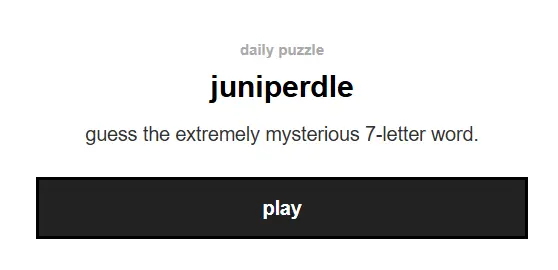
Juniperdle
Recommended Puzzle Mashups

What Is Juniperdle?
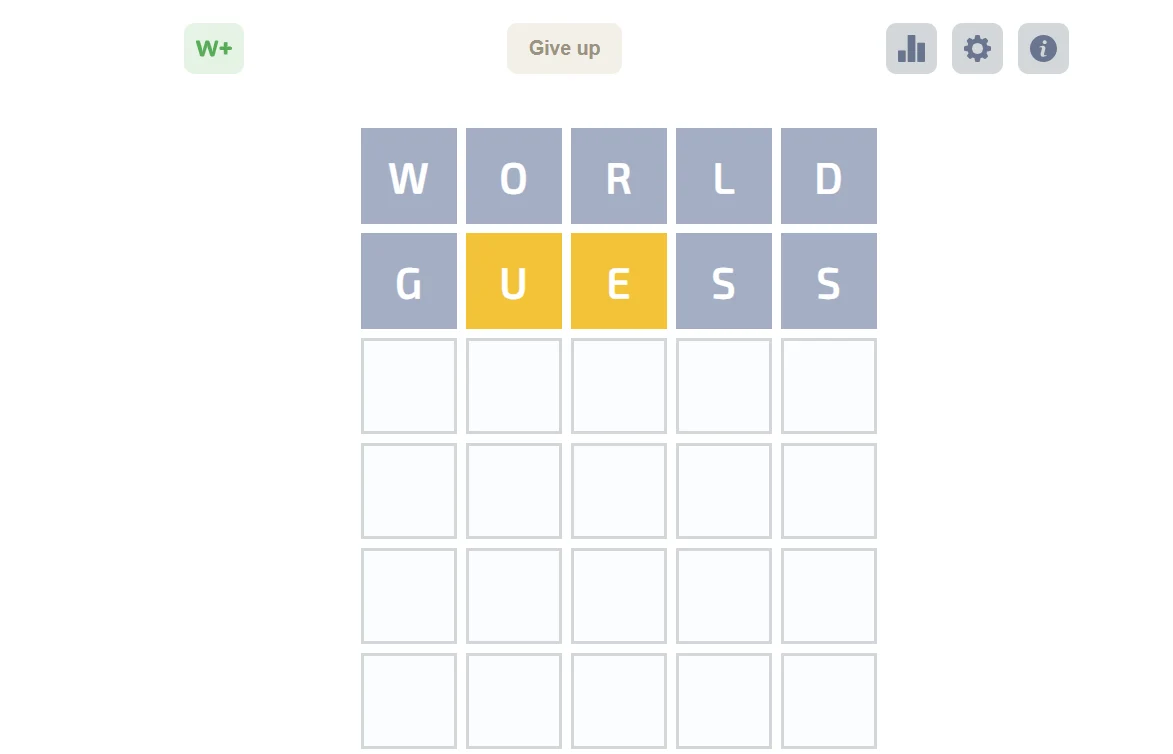
Juniperdle is a deliberately chaotic puzzle game that starts with a simple premise and then refuses to stay simple. On paper, it is a seven-letter Wordle-style challenge. In practice, it behaves like a parody compilation of modern daily puzzle games, constantly interrupting your guesses with extra mechanics, fake-outs, and mini-puzzles.
That is what makes it stand out. Instead of copying one successful format, Juniperdle smashes several together. Playing one round can feel like playing multiple internet puzzle trends at once, which is exactly the joke and exactly the appeal.
Why Juniperdle Feels Different
Most guessing games are built around clarity. Juniperdle is built around controlled nonsense. The hidden answer is tied to a very specific seven-letter target, but the route there is intentionally noisy. As you type, the keyboard can reshuffle itself, extra symbols can appear, and new pop-up puzzle screens can hijack the run.
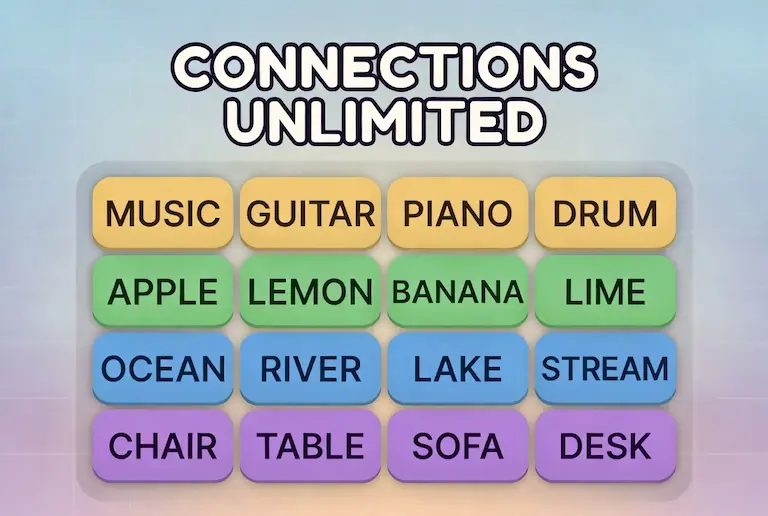
Those interruptions are not random filler. They are the identity of the game. Juniperdle borrows the language of games like Wordle, Connections, crossword-style clue grids, and other daily brain teasers, then exaggerates all of them into one unstable but funny experience.
How Juniperdle Works
- Start with a seven-letter guess: The structure begins like a Wordle variant, but the game does not stay orderly for long.
- Watch the interface change: Entering letters can trigger shuffled keyboard layouts and other disruptive twists.
- Handle pop-up puzzle detours: You may be pulled into mini-games inspired by other puzzle genres before returning to the main answer.
- Work through one specific solution: The humor comes from the chaos, but the game still points toward a single intended answer.
- Expect parody, not fairness: Juniperdle works best when you treat it as a playful satire of puzzle design rather than a strict competitive logic test.
The Multi-Puzzle Gimmick
The strongest hook in Juniperdle is that one game keeps pretending to be several games. A guess might lead into a category-sorting challenge, a crossword-flavored interruption, a strands-style word search idea, or another joke riff on familiar puzzle systems. The result is less like a clean daily routine and more like a carnival of recognizable mechanics.
That design also explains why the game has gotten attention. Plenty of newer web puzzles are variations on a single pattern. Juniperdle stands out by commenting on that entire trend. It is both a playable puzzle and a joke about how many puzzle games now exist.
Best Way To Approach It
If you play Juniperdle like a pure optimization puzzle, it can feel hostile. If you play it as a comedy puzzle with a real answer hidden inside the chaos, it becomes much more enjoyable. The right mindset is to stay flexible, read every interruption carefully, and accept that the interface itself is sometimes part of the joke.
- Do not expect a stable keyboard: Re-orient after each input instead of relying on muscle memory.
- Treat side puzzles as clue delivery systems: Even when they look absurd, they are part of the overall theme.
- Focus on the central word target: The extra puzzle formats are distractions, but they still orbit the main answer.
- Be patient with the bit: The game intentionally drags modern puzzle design into something sillier and more chaotic.
Why People Like Juniperdle
Juniperdle works because it understands the culture around daily browser puzzles. Players already know what a Wordle clone feels like. They know the satisfaction of a Connections solve, the rhythm of a mini crossword, and the flood of games inspired by those formats. Juniperdle takes that shared language and turns it into a self-aware mess.
So even when the joke is exaggerated, the game still feels readable. You recognize what it is parodying. That makes the experience land as more than random chaos. It is a mashup with a target.
Who Should Play Juniperdle?
Juniperdle is a strong pick for players who already follow internet puzzle culture and want something less polished, less predictable, and more playful than a standard daily word game. If you only want clean logic and minimal friction, classic Wordle-style games are a better fit. If you enjoy seeing those formats bent into parody, Juniperdle is exactly that.
Frequently Asked Questions
What is Juniperdle?
Juniperdle is a seven-letter puzzle game that mixes a Wordle-like guessing structure with disruptive mini-games inspired by other popular puzzle formats.
Is Juniperdle just a Wordle clone?
No. It starts from a Wordle-like base, but its real identity is the way it layers parody mechanics, interface chaos, and extra puzzle interruptions on top of that foundation.
Why does Juniperdle feel so chaotic?
Because the game is intentionally designed that way. The shuffled keyboard, pop-up puzzles, and strange structure are part of the joke and the core design idea.
What kinds of games does Juniperdle reference?
It riffs on Wordle-style guessing, Connections-like grouping, crossword-style clues, Strands-like ideas, and the broader trend of stacked daily browser puzzles.
Is Juniperdle free to play?
Yes. You can open the official game from this page and play it for free in your browser.